
Maximize detection for minimal
residual disease (MRD).1,2
Detect cancer recurrence earlier with the first tissue-free MRD test
for colorectal, breast and lung cancer.1,2
Detect cancer recurrence earlier with the first tissue-free MRD test
for colorectal, breast and lung cancer.1,2
TISSUE-FREE
MRD detection.1
0.005%
limit of detection to maximize sensitivity.1
Tumour Fraction
based on methylation to accurately quantify disease burden.1
7-day
turnaround time for timely adjuvant decision-making.†3

Guardant Reveal™ is powered by Guardant Infinity™ – the first and only commercially available platform that unlocks epigenomics to transform precision oncology.*
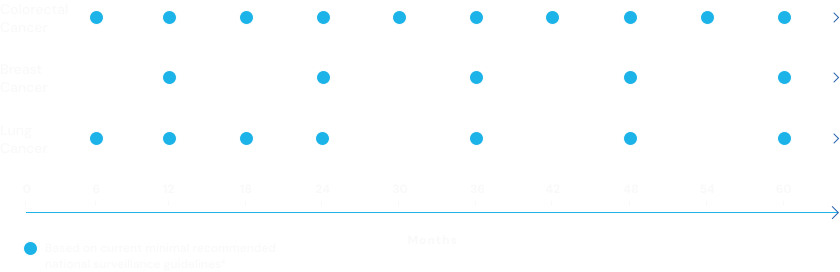

One order form can cover both monitoring and MRD assessment with results delivered in as few as 7 days from sample receive.3


Important Note: Guardant Reveal™ was developed as a Laboratory Developed Test (LDT), and its performance characteristics determined, by the Guardant Health Clinical Laboratory in Redwood City, CA, USA, which is certified under the Clinical Laboratory Improvement Amendments of 1988 (CLIA) as qualified to perform high-complexity clinical testing. This test has not been cleared or approved by the US FDA. Guardant Hereditary Cancer was developed as an LDT and is not cleared or approved by the US FDA.
† Median turnaround time from sample receipt to results.
‡ For invasive carcinomas and inflammatory breast cancers and non-small cell lung cancer (adenocarcinoma, large cell, and squamous).
References:
1. Guardant Health data on file. December 12, 2025. Guardant Health, Inc. Redwood City, CA., 2. Parikh AR, Van Seventer EE, Siravegna G, et al. Minimal residual disease detection using a plasma-only circulating tumor DNA assay in patients with colorectal cancer. Clin Cancer Res. 2021;27(20):5586-5594. doi:10.1158/1078-0432.CCR-21-0410., 3. Guardant Health data on file. September 27, 2024. Guardant Health, Inc. Redwood City, CA. 4. National Comprehensive Cancer Network (NCCN) (2025) NCCN Clinical Practice Guidelines in Oncology (NCCN Guidelines®): Survivorship, Version 2.2025. Fort Washington, PA: NCCN.
